By Klaus Jakobsen, developer of A Decent Remote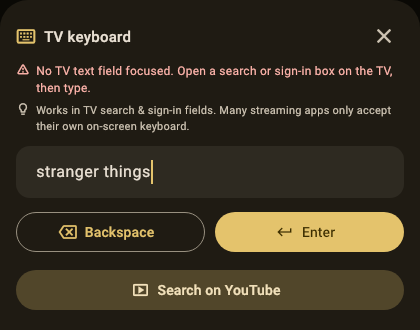
The on-screen keyboard is where TV interfaces go to feel like 2005: a nine-row letter grid, a d-pad, and a password with mixed case and symbols. Both Fire TV and Android/Google TV accept real keyboard input over the network; they just never shipped a keyboard to use it with. Your iPhone is that keyboard.
How do I set it up?
Once per device, no original remote required:
- Android TV / Google TV: open A Decent Remote, tap the TV, type the 6-digit code it shows on screen (full steps).
- Fire TV: tap the device and accept the one-time “Allow USB debugging” prompt, with the TV remote via HDMI-CEC if the Alexa remote is gone (full steps).
After that, the app’s keyboard button opens the iOS keyboard, and everything you type lands on the TV character by character: letters, numbers, symbols, backspace, and paste.
Where does it shine, and where are the honest limits?
Shines: global search, app-store search, Wi-Fi passwords, and above all sign-ins, where paste from a password manager turns the worst TV chore into two seconds. Dictation works too, since it’s the real iOS keyboard.
Limits: platforms only expose their standard text fields. A streaming app that draws its own custom letter grid (a few insist) ignores every external keyboard, including Google’s own remote app; there you’re navigating the grid, just faster from the phone. And YouTube search specifically has a better route than typing into a grid at all: opening the results page directly on the TV, covered in the YouTube search guide.
Which other TVs can the same phone type on?
Roku takes keyboard input with no pairing whatsoever (guide), Apple TV types over its remote protocol regardless of Apple ID (guide), and Samsung and LG accept typing into their TV-level search fields after the one-time pairing. One keyboard habit, every screen in the house: that’s the actual pitch.